How to Reduce Echo in a Meeting Room: 7 Simple Fixes

The best way to reduce echo in a meeting room is to add soft, sound absorbing surfaces where sound bounces most. That means acoustic panels on the walls, a treated ceiling and a rug or carpet on the floor. Each one soaks up some of the sound that would otherwise ring around the room.
- Hang acoustic panels on the biggest bare walls.
- Treat the wall facing the glass.
- Check the ceiling.
- Put something soft on the floor.
- Soften the table area.
- Fix the video call setup.
- Keep doors and gaps in mind for privacy.
Why meeting rooms echo so much
Most meeting rooms are built from the loudest surfaces you can buy. Glass walls, painted drywall, a big hard table, a hard ceiling and a screen on the wall all bounce sound back. Add a dozen people and every voice keeps ringing after it stops.
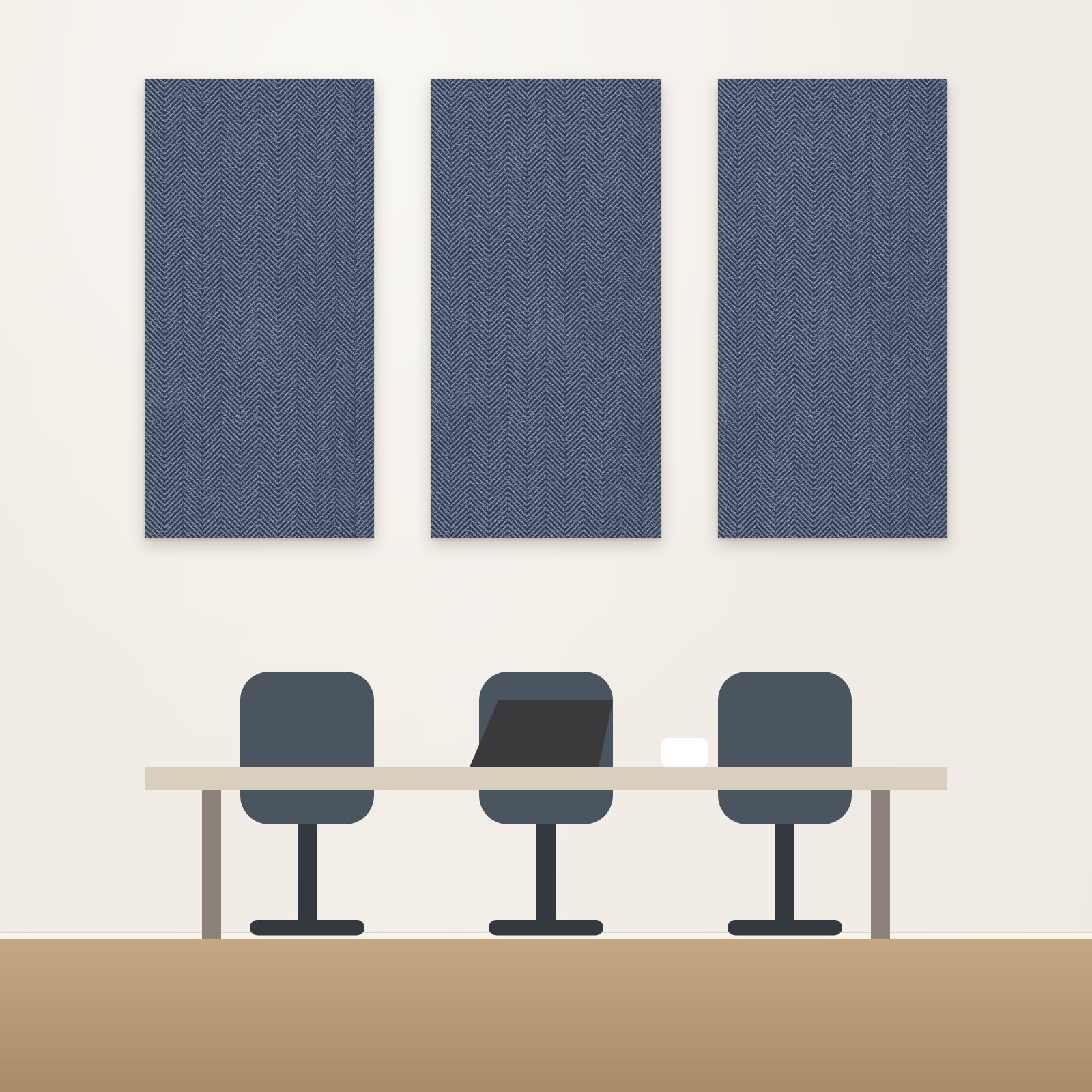
That ringing is reverberation. It smears words together, so people lean in, talk louder and repeat themselves. Our guide on how acoustic panels work explains why soft surfaces stop it.
Why meeting room echo matters more on video calls
People in the room can partly tune echo out. Microphones can't. A laptop or conference mic picks up the voice plus every bounce, so people dialing in hear a hollow, distant sound that's hard to follow.
It adds up across a workday. In the US government's office acoustics guide, GSA Sound Matters, 60% of survey respondents said they could get more done if it were quieter. Half said noise keeps them from being as productive as they could be.
7 ways to reduce echo in a meeting room
Work through these in order. The first few do most of the work.
1. Hang acoustic panels on the biggest bare walls
Wall panels are the quickest win, since you can hang them without touching the ceiling or the HVAC. The GSA guide suggests covering about 25% of the wall area in conference and training rooms with absorptive panels.
Spread them across walls that face each other, around head height when seated. Our office acoustic panels are designed for exactly this, in patterns that line up into one feature wall.
2. Treat the wall facing the glass
You can't cover a glass wall, and sound bounces between glass and the wall across from it. So put the panels on the opposite wall instead. Breaking up that pair of parallel hard surfaces stops the fluttery ring.
3. Check the ceiling
In many offices the ceiling is the biggest single surface in the room. If yours is drywall or exposed concrete, it's working against you. Acoustic ceiling tiles or hanging baffles help a lot, though they're usually a job for the building.
4. Put something soft on the floor
Carpet or a large rug soaks up footsteps, chair scrapes and some voice. If the room has a polished concrete or hard floor, a rug under the table is a cheap upgrade that shows right away.
5. Soften the table area
The table is a big flat reflector right at mouth height. Upholstered chairs help, and so does keeping clutter like loose glass whiteboards off the table. Panels on the wall nearest the table take care of most of the rest.
6. Fix the video call setup
Put the microphone close to the people talking, not at the far end of the table. Hang panels on the wall the mic faces, so less echo bounces straight into it. Room acoustics and a decent mic together beat either one alone.
7. Keep doors and gaps in mind for privacy
Panels reduce echo inside the room, but they don't stop sound leaking out. If people outside can hear the meeting, that's a blocking job: solid doors, door seals and walls that go up to the structure above.
Open offices need a different plan
An open office has no walls to hold sound in, so the goal is stopping voices travelling across the floor. The GSA guide calls this the ABCs: absorb, block and cover. Panels and ceilings absorb, screens block, and quiet background sound covers what's left.
The industry guide for this is ASTM E1374 on open office acoustics, which lays out how those pieces fit together. For a busy open floor, a pro acoustician is worth the money.
How many panels a meeting room needs
Start with the 25% wall coverage rule for a conference room, spread over at least two walls. A small huddle room might need four panels, while a boardroom may need eight or twelve.
Our acoustic panels for business come in packs of 4, 8 or 12 for that reason. A design like Blueprint Lines repeats edge to edge, so a row of panels reads as one long piece.
A note on fire rules in commercial spaces
Wall finishes in offices and other commercial buildings usually have to meet fire rules. In Canada that's often a flame spread rating under ULC S102. Fire testing on our panels isn't confirmed yet, so contact us before you order for a commercial space.
Questions people ask about meeting room echo
What's the fastest way to reduce echo in a meeting room?
Hang acoustic panels on the two biggest facing walls and add a rug. That handles most of the problem in an afternoon, with no construction.
Will acoustic panels make a meeting room private?
No. They cut echo inside the room but don't stop sound getting through walls and doors. Privacy needs seals, solid doors and better walls.
Do acoustic panels help on Zoom and Teams calls?
Yes. Less echo in the room means the mic picks up a cleaner voice, so people on the call hear you more clearly.
Key takeaways for a quieter meeting room
- Meeting rooms echo because of glass, hard walls, hard ceilings and big tables.
- Mics pick up every bounce, so echo hurts video calls most.
- Wall panels are the quickest fix. Aim for about 25% of the wall area.
- Treat the wall facing any glass to stop flutter echo.
- A rug and soft chairs help more than people expect.
- Panels cut echo but don't add privacy. Blocking sound is a separate job.
- Check fire rules for wall finishes in commercial spaces.
If you also work from home, the same tricks apply to a spare room. See our home office designs for a smaller version of the same idea.


