How Do Acoustic Panels Work? A Plain-English Guide

Acoustic panels work by soaking up the sound waves that hit them, so less sound bounces back into the room. Inside the panel, soft open fibres turn a little of that sound energy into heat. Less bounce means less echo, clearer voices and a room that just feels calmer.
- Panels absorb sound inside a room. They don't block sound from getting in or out.
- Sound gets caught in the fibres and turns into a tiny bit of heat.
- That cuts echo, so talking and listening get easier.
- Thicker panels handle low sounds better than thin ones.
- Spread them on the big bare walls, especially walls that face each other.
What happens to sound in a room with hard walls
When someone talks, sound spreads out in every direction. Drywall, glass, tile and hardwood floors bounce most of it straight back. Those bounces keep arriving a split second after the original sound, and they pile up.
That leftover sound is called reverberation. Acousticians measure it as reverberation time: how long a sound takes to fade by 60 decibels after it stops. The longer it is, the more words smear into each other.
A paper from the Acoustical Society of America on classroom acoustics points to hard surfaces and high ceilings as the usual cause of too much reverberation. Its fix is sound absorbing panels and tiles, and the classroom standard it describes targets 0.6 seconds.
How acoustic panels work, step by step
Here's what goes on when a sound wave reaches a panel:
- The sound wave hits the face of the panel.
- Instead of bouncing off a hard surface, most of it passes into the panel.
- Inside, the air moves back and forth through thousands of tiny gaps between fibres.
- Friction between that moving air and the fibres turns some of the sound energy into heat.
- What comes back out is weaker, so the echo dies down sooner.
The heat is far too small to feel. The US government's office acoustics guide, GSA Sound Matters, describes absorbing materials the same way: they take in sound energy and give it off as heat.
Sound absorption is not soundproofing
This is the part most people mix up. Sound absorption works inside the room, cutting echo. Soundproofing stops sound passing through walls, floors and doors, and that takes mass, sealed gaps and real building work.
So a panel won't stop the neighbour's TV or the traffic outside. Think of absorption as a sponge for echo and soundproofing as a thicker wall.
The GSA guide calls it the ABCs of noise control: absorb, block and cover. Panels only do the "absorb" part.
What an NRC rating means
You'll see acoustic panels sold with an NRC number. NRC stands for noise reduction coefficient, a single number between 0 and 1 that averages how much sound a material absorbs across four pitches, from low voices up to higher ones.
It's measured in a lab under a standard test. A rating near 0 means the material bounces almost everything back, like painted concrete. A rating near 1 means it soaks up nearly all of the sound that hits it.
We don't publish an NRC for our panels yet. We'd rather wait for proper lab numbers from our maker than guess at one.
Why thickness and air gaps matter
Low sounds have long waves. A 100 Hz hum has a wave about 3.4 metres long, so a thin panel can't catch much of it. Voices, dishes and footsteps sit higher, and thin to medium panels handle those well.
A thicker panel, or a small air gap behind it, helps with lower sounds. For living rooms, offices and restaurants, the noise people complain about is mostly voices, so regular wall panels do the most useful work. Deep bass trapping for a home theatre is a separate project.
Where to hang acoustic panels
Where a panel goes matters almost as much as how many you have. A few simple rules:
- Start with the biggest bare walls in the room.
- Treat walls that face each other, which is where that fluttery ring comes from.
- Hang them around ear height where people sit and talk.
- Spread panels around the room rather than bunching them in one spot.
- Add rugs, curtains and soft furniture, which all help too.
For meeting rooms and training rooms, the GSA guide suggests covering about 25% of the wall area with absorptive panels. A living room usually needs less, since sofas and rugs are already doing some of the work.
How many acoustic panels you need
It depends on the size of the room, how hard the surfaces are and what happens in there. A quick test helps: stand in the middle, clap once and listen to how long it rings.
Start with one large panel or a set on the worst wall, then clap again. If it still rings, add panels to the facing wall. Small rooms often need one or two pieces, while big open spaces need a lot more.
Why art panels make more sense than foam
Most acoustic panels look like they belong in a recording studio. Grey foam does the job, but nobody wants it over the sofa. Printed art panels do the same echo work and give you something you'd actually choose to look at.
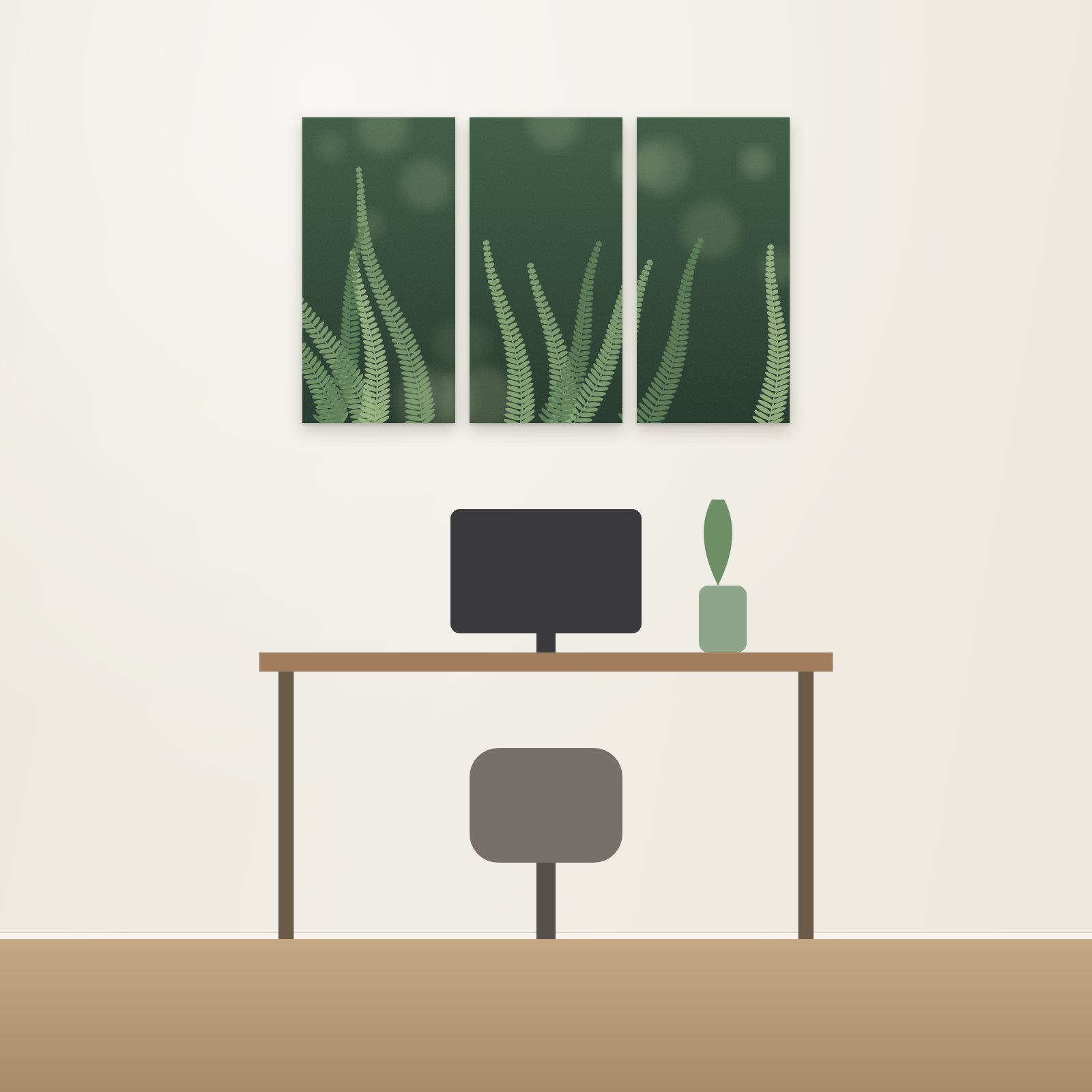
Our acoustic art panels work over a sofa, bed or desk. For a wider wall, 3-panel acoustic art sets or acoustic wall murals cover more space, and more coverage means more absorption.
Running a cafe, office or gym? Our commercial acoustic panels come in packs for bigger rooms. And if you're still deciding on style, our guide to acoustic wall art walks through the options.
Questions people ask about acoustic panels
Do acoustic panels actually work?
Yes, for echo. They cut the bounce inside a room, so speech is clearer and the room sounds softer. They don't soundproof a room or stop noise from next door.
Do acoustic panels work on the ceiling?
They do, and ceilings are often the biggest bare surface in a room. Walls are just easier to reach and nicer to decorate, which is why most people start there.
Can one acoustic panel make a difference?
In a small, echoey room, one large panel can take the edge off. In a big room you'll notice much more with several panels spread around.
Do acoustic panels work for bass?
Not much, unless they're thick or have an air gap behind them. Low bass needs deeper treatment than a wall panel gives.
Key takeaways on how acoustic panels work
- Acoustic panels absorb sound. Soft fibres trap moving air and turn a little sound energy into heat.
- Less bounce means less reverberation, so words stop smearing together.
- They cut echo inside a room but don't soundproof it. Blocking sound needs building work.
- NRC is a lab rating from 0 to 1. Higher means more absorption.
- Thin panels handle voices well. Thicker panels or an air gap help with lower sounds.
- Big bare walls and walls that face each other are the best place to start.
- Art panels do the same echo job as foam, and they look like they belong in your home.


