Acoustic Wall Art: What It Is and How to Choose It

Acoustic wall art is artwork printed on a sound absorbing panel, so it hangs like any other piece of art and also cuts echo in the room. It's a way to calm a loud room without the grey foam look of a recording studio. You get one thing on the wall that does two jobs.
- It looks like a print or a mural but works like an acoustic panel.
- It cuts echo inside a room. It doesn't soundproof it.
- A regular canvas print does very little for sound.
- Bigger pieces cover more wall and soak up more echo.
- Before you buy, ask for lab test numbers and how the print is made.
Why art panels for sound exist
Homes have gotten louder. Open plan layouts, hardwood and tile floors, big windows and fewer heavy curtains all mean more hard surfaces bouncing sound around. Voices carry, dishes clatter and the TV seems to fill the whole floor.
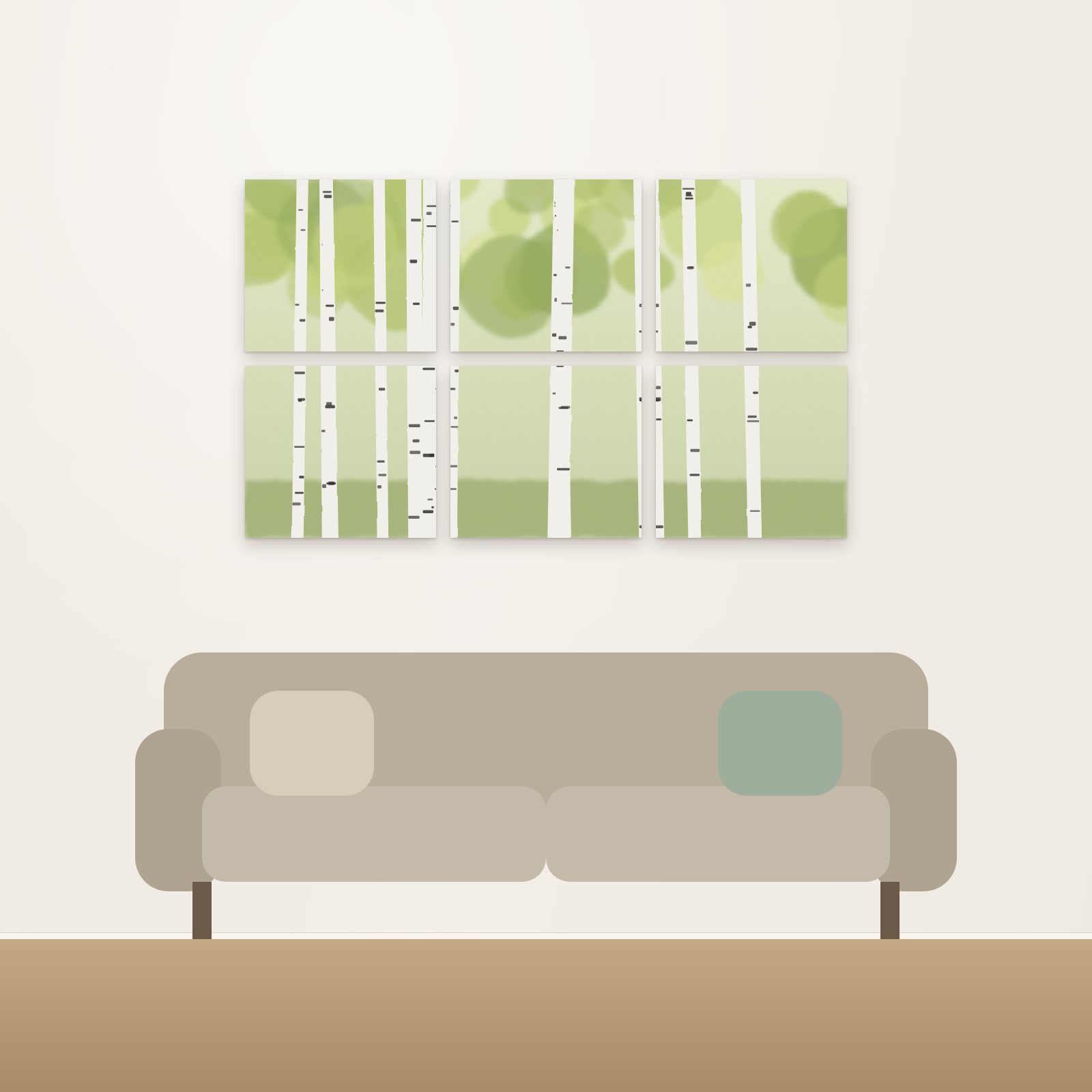
The usual fix is acoustic foam or fabric panels, which work but look like an office or a studio. Art panels take that same idea and puts a picture on the front, so the panel becomes the art you were going to hang anyway.
How an art panel cuts echo
The panel behind the print is made of soft, open fibres. When sound hits it, the air moves through tiny gaps in those fibres and loses some of its energy as heat, so less sound bounces back. The US government's office acoustics guide, GSA Sound Matters, explains absorbing materials the same way.
The result is less echo and less of that hollow, ringing sound in a bare room. For the full science, see our plain guide on how acoustic panels work.
Art panels vs a canvas print
A standard canvas print is a thin layer of fabric stretched over a frame. It soaks up a little high pitched sound, but it's too thin to do much. Framed art behind glass is worse, since glass is a hard surface that bounces sound straight back.
An art panel has a thicker, porous panel behind the picture. That depth is what gives it room to trap sound. On the wall they look alike, but they behave very differently.
Art panels vs foam panels
Foam is cheap and it works, but it's made for studios. It comes in a few colours, it looks technical, and it rarely fits a living room or a restaurant dining room.
Art panels trade some of that low price for looks. You choose a design you like, hang fewer, larger pieces, and the room gets quieter without looking treated. For most homes and businesses that's the better deal.
Types of acoustic wall art
Art panels come in a few shapes, and each suits a different wall:
- Single panels. One piece over a sofa, bed or desk. Our acoustic art panels start here.
- 3-panel sets. One picture split across three panels with small gaps, good for wider walls. See our 3-panel acoustic art sets.
- Murals. A large picture across six or ten panels that covers a whole feature wall. Browse our acoustic wall murals.
- Hexagons, gallery grids and door art. Shapes and layouts for walls that need something different.
How to choose art panels for your room
Size matters for both looks and sound. A common decorating rule is to pick art about two thirds the width of the furniture under it. For sound, more coverage means more absorption, so lean bigger when the room is loud.
Placement matters too. Start with the biggest bare wall, ideally one that faces another hard wall, and hang the art around eye level. In a long room, art on both sides helps more than two pieces side by side.
Then pick the design. Landscapes and soft abstracts suit calm rooms, while bold or playful designs suit kids' rooms and cafes. Our landscape collection is a good place to start if you want something easy to live with.
What to check before you buy
Not all sound absorbing art is equal. A few questions worth asking any seller:
- Is there a lab test? Absorption is measured with a standard test, such as ASTM C423 for sound absorption, and reported as an NRC from 0 to 1. Ask for the number and the report.
- How is it printed? A print that seals the face of the panel can bounce back more sound than one that leaves the fabric open.
- How thick is it? Thicker panels absorb more, especially lower sounds.
- How does it hang? Check what's included and what your wall needs.
- Is it for a kids' room? Hang it securely, out of reach and never over a crib.
We're still waiting on lab numbers from our maker, so we don't publish an NRC yet. When we have proper results, we'll share them.
Rooms where art panels help most
A few rooms get the biggest payoff:
- Living rooms with hard floors and high ceilings.
- Home offices, where echo makes video calls sound hollow.
- Dining rooms and kitchens, where hard surfaces and loud conversations meet.
- Playrooms, where small voices get very loud.
- Cafes and small shops that want a quieter room without a studio look.
Questions people ask about acoustic wall art
Does acoustic wall art really work?
Yes, for echo inside the room. It softens sound and makes conversations clearer. It won't block noise coming through walls, floors or windows.
Is it the same as soundproofing?
No. Soundproofing stops sound moving between rooms and needs building work. Art panels only cut the bounce inside the room it hangs in.
How much of the wall should it cover?
There's no exact rule for homes. One large piece on the worst wall often makes a clear difference, and a second piece on the facing wall makes more.
Key takeaways on acoustic wall art
- It's art printed on a sound absorbing panel. It looks like art and cuts echo.
- It works inside the room only. It is not soundproofing.
- Canvas prints and framed art do little for sound. A thicker, porous panel is what makes the difference.
- Bigger pieces and more coverage give more absorption.
- Start with the largest bare wall, especially one facing another hard wall.
- Ask sellers for lab test results, print method and thickness before you buy.


